



Biomedical engineer · Computational physicist · CFD/FSI

Associate Researcher · University of Santiago de Compostela

Computational modeling for translational biomedical research.

I combine physics, mathematics, and biomedical engineering to address patient-specific questions in medicine and support academic, clinical, and R&D teams.

Portrait of Ismael Arán-Tapia

Research experience & collaborations

  • University of Santiago de Compostela
  • University of Utah
  • University of Bern
  • Clínica Universidad de Navarra
  • University of California, Berkeley
  • CITMAga — Centro de Investigación y Tecnología Matemática de Galicia
  • CRETUS

Current research

Three pillars of translational biomedical research.

I investigate clinically relevant biomechanics of the inner ear and aorta using AI-assisted medical image analysis and reproducible computational modeling workflows.

Anatomically detailed vestibular model showing the three semicircular canals, their ampullae and the utricle

01 · Vestibular biomechanics

Inner-ear modeling for diagnosis and treatment

I combine patient-specific anatomy, fluid dynamics, and clinical measurements to investigate BPPV, vHIT, and magnetic vestibular stimulation.

Current focus Mechanistic interpretation of diagnostic tests, maneuver design, simulation-guided treatment strategies, and clinical validation.

Patient-specific aortic digital twin showing the cardiac origin, aortic arch and simulated blood flow

02 · Cardiovascular mechanics

Aortic function in health and disease

I use image-based CFD and FSI to study aortic blood flow and wall mechanics, aiming to support personalized approaches to hypertension and atherosclerosis.

Current focus Aortic hemodynamics, vessel elasticity, pulse-wave dynamics, and clinically interpretable biomechanical metrics.

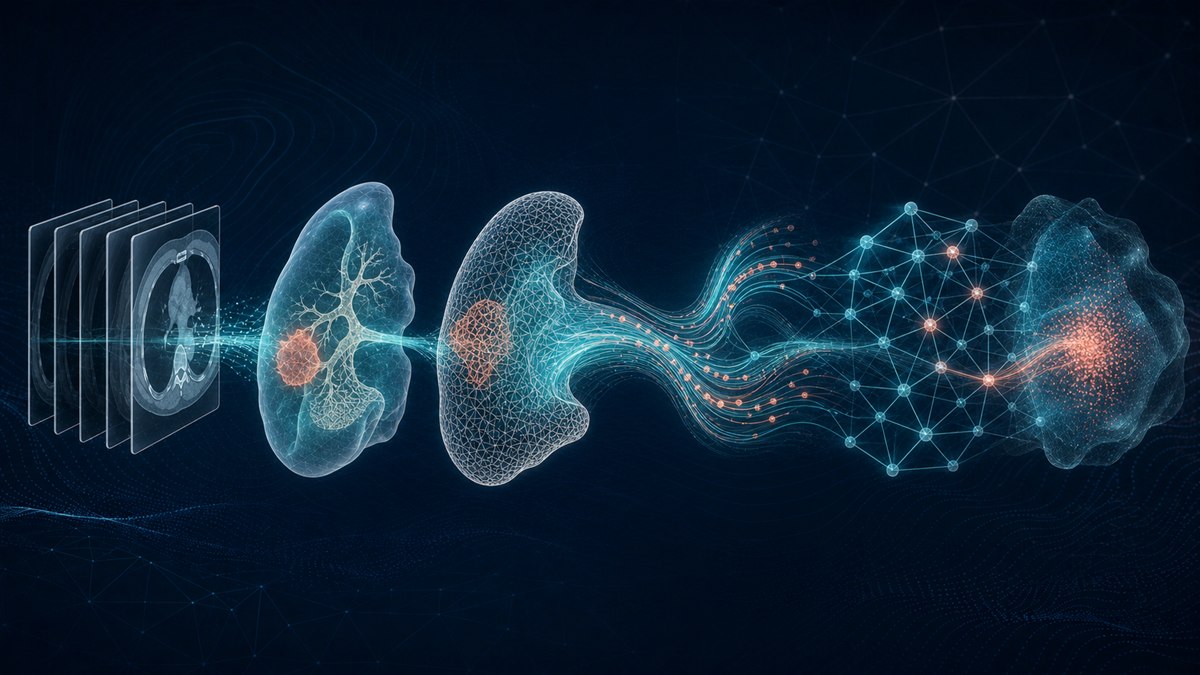
Medical imaging workflow connecting automated anatomical segmentation and reconstruction with computational simulation and patient-specific model generation

03 · Medical imaging & AI

From medical images to simulation-ready models

I generate patient-specific anatomical models from medical images using AI-assisted analysis, automated segmentation, and geometry reconstruction.

Current focus Landmark detection, workflow automation, and reproducible image-to-simulation pipelines.

I welcome collaborations that turn clinical or experimental questions into testable computational studies.

Discuss a research collaboration

Consulting and R&D

Biomedical simulation, from feasibility to delivery.

I support academic, clinical, and R&D teams with clearly scoped biomedical simulation projects, traceable methods, and practical deliverables.

Feasibility & modeling strategy

Turn a clinical, experimental, or R&D question into a realistic modeling plan with clearly defined data requirements, assumptions, risks, and validation needs.

Typical outputs Feasibility assessment · technical roadmap · data and validation plan

Simulation & workflow development

Develop fit-for-purpose, image-based CFD/FSI, particle-transport, or multiphysics models to test hypotheses, compare scenarios, and evaluate design choices.

Typical outputs Computational model · simulation-ready geometry · sensitivity analysis · documented workflow and results

Independent review & handover

Independently assess model assumptions, numerical methods, uncertainty, validation, and reproducibility, with clear recommendations for handover or further development.

Typical outputs Technical review · verification and validation priorities · handover documentation

Have a biomedical modeling question? Let’s define a focused first step.

Discuss a consulting project

Research output

Selected publications

  1. From a conventional maneuver to a mechanical repositioning procedure for torsional-vertical down beating positioning nystagmus based on numerical simulations

    European Archives of Oto-Rhino-Laryngology

    DOI
  2. Optimization of the Yacovino maneuver for superior canal BPPV using numerical simulations

    Hearing Research 466:109374

    DOI
  3. Modeling of magnetic vestibular stimulation experienced during high-field clinical MRI

    Communications Medicine 5, 27

    DOI
  4. Numerical Simulations of the Epley Maneuver With Clinical Implications

    Ear & Hearing 45(4):1033–1044

    DOI
  5. Numerical simulations to determine the stimulation of the crista ampullaris during the Head Impulse Test

    Computers in Biology and Medicine 163:107225

    DOI